JOURNALAB75
WATER DAMAGE INSURANCE DOCUMENTATION HOUSTON / COMMERCIAL DECISION FILE
Water Damage Insurance Documentation Houston for Photos, Estimates, and Claim Records
Organize loss records, photographs, estimates, emergency steps, invoices, communications, property retention, and policy questions without coverage promises.
- Source field
- a water loss that may be reported under a property policy or another responsible-party process
- Material field
- affected building materials, contents, source components, temporary protections, removed items, and repair interfaces
- Decision
- preserve a chronological, reviewable record while the policyholder communicates with the insurer and selected providers
Water Damage Insurance Documentation Houston Commercial Scope Connects the Loss to an Authorized Result
Water Damage Insurance Documentation Houston starts with a water loss that may be reported under a property policy or another responsible-party process. A commercial restoration decision needs more than a wet-area description. The request should identify who controls the property, who can authorize entry and material access, whether occupants or operations remain in the space, which source-repair provider is involved, and which rooms, levels, contents, and assemblies may be affected.
The decision objective is to preserve a chronological, reviewable record while the policyholder communicates with the insurer and selected providers. That objective should appear in the proposal as measurable work, responsibilities, assumptions, and exclusions. Extraction, demolition, cleaning, drying, contents handling, monitoring, documentation, specialty coordination, and reconstruction are separate line-item families even when one provider offers several of them.
DryTrace Restoration uses this article to prepare a better assessment conversation. The page does not confirm a dispatch, arrival window, price, insurance payment, license, or finished outcome. The actual selected provider must verify the site, legal business, capability, availability, credentials, safety plan, terms, and written scope before the property owner authorizes work.
Water Damage Insurance Documentation Houston Source Status Separates Mitigation from Permanent Repair
The source record should state whether water is still flowing, when the loss was discovered, the known or suspected origin, the last observed change, any safe shutoff or temporary protection already completed, and the party responsible for permanent repair. That party may be a plumber, roofer, appliance technician, utility, property manager, fire authority, or another qualified specialist.
Restoration crews can need source information to plan access and prevent repeated wetting, but a mitigation proposal should not silently include pipe diagnosis, appliance repair, roof replacement, electrical work, structural engineering, or exterior construction. For Water Damage Insurance Documentation Houston, the file should identify where one scope stops, what evidence another trade needs, and what condition must exist before drying or reconstruction can continue.
Photographs and a timeline help, but no one should enter an unstable, contaminated, or electrically hazardous area to improve website intake. If the source cannot be addressed safely, use the responsible utility, emergency authority, licensed trade, or property control channel. The form can mark a concern; it cannot inspect the hazard or replace an on-site safety decision.
Water Damage Insurance Documentation Houston Safety and Water Condition Control Occupant Access
Standing water near electrical equipment, damaged wiring, outlets, appliances, or controls requires caution. Do not operate electrical controls or use electrical equipment while standing in water. If power cannot be switched off from a dry location, contact a qualified electrician or appropriate emergency authority. A restoration marketing page should never instruct an occupant to test an unsafe condition.
Sewage and floodwater can contain biological, chemical, and physical hazards. Avoid contact, keep children and pets away, and disclose the source and any visible contamination, odor, chemical, or debris concern before normal cleanup begins. Water condition can change with time and contact, so a label based only on the original source may not describe the conditions found at assessment.
Water Damage Insurance Documentation Houston planning should record the affected boundary, occupant restrictions, personal protective requirements, containment or controlled access, porous-material decisions, cleaning method, disposal, and responsibility for any testing or clearance. Health advice, environmental diagnosis, and regulated remediation are separate from a general assessment unless the actual provider has documented authority and scope.
Water Damage Insurance Documentation Houston Moisture Mapping Defines Affected and Reference Boundaries
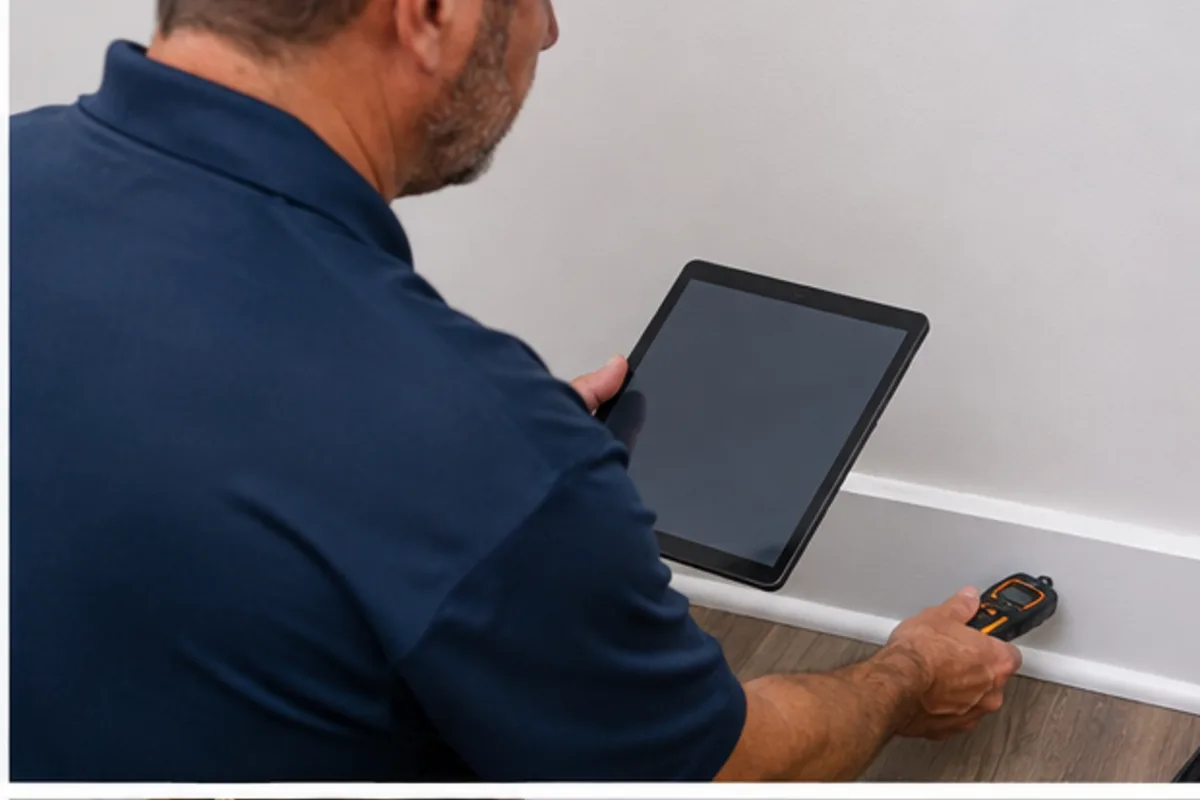
A useful moisture map ties each observation or reading to a room, elevation, material, instrument context, and comparable reference. Visible water or staining is one part of the map. The route may continue behind baseboards, inside insulation, below flooring, through cabinet voids, along framing, into ceiling systems, or to a room that looks unrelated to the source.
For this scope, the principal material field includes affected building materials, contents, source components, temporary protections, removed items, and repair interfaces. Each assembly should be described by layers, finish, construction, known exposure, physical condition, accessibility, and adjacent dry reference. The provider should distinguish a screening indication from a verified cavity condition and explain when selective access or a specialty inspection is needed.
Thermal imaging and noninvasive meters can guide investigation but do not prove every concealed condition. Repeatable location labels, photographs, meter type, limitations, dry references, and access findings make the boundary more useful. The customer can then compare whether the proposal addresses the same rooms and layers rather than only the visibly wet surface.
Record the material, location, reference, reading pattern, limitation, and access decision together. An isolated number without context cannot explain the affected assembly.
Water Damage Insurance Documentation Houston Material Decisions Follow Condition, Integrity, and Drying Feasibility
Material decisions should not be reduced to save or remove without reasons. Water condition, elapsed time, contact history, porosity, integrity, finish, installation, access, manufacturer guidance, cleaning compatibility, dimensional change, contamination, and the repair sequence can all affect the proposed action. Different layers in one floor or wall may need different treatment.
Drywall and insulation can require cavity access. Carpet, pad, tack strips, wood, laminate, resilient flooring, adhesive, underlayment, concrete, and subfloor retain and release moisture differently. Cabinets and millwork add toe kicks, enclosed voids, composite panels, finishes, countertop support, wall interfaces, and contents. Commercial ceilings, partitions, fixtures, and inventory add operational constraints.
Water Damage Insurance Documentation Houston proposals should list retained materials, controlled openings, planned removals, cleaning, drying, specialty referrals, disposal, temporary protection, and reconstruction interfaces. The record should state who approves destructive access, who protects or inventories contents, whether finish matching is included, and which condition will trigger a revised decision rather than relying on a blanket promise.
Water Damage Insurance Documentation Houston Extraction and Access Scope Remove Water without Hiding Wet Layers
Bulk water removal is an important step, but extraction alone does not establish that a structure is dry or ready for repair. The plan should identify accessible water, depth or spread, surface type, edges, obstructions, contents, lower areas, collection and disposal requirements, equipment route, and any zone that cannot be reached safely or without opening an assembly.
Extraction methods depend on the material and condition. Hard surfaces, carpet systems, floor cavities, cabinets, commercial flooring, concrete, and contents present different interfaces. If carpet is extracted but pad or subfloor remains wet, or if a cabinet face is dry while the toe-kick cavity is wet, the remaining layer must stay visible in the scope and monitoring record.
For Water Damage Insurance Documentation Houston, the extraction note should connect the initial boundary to the post-extraction condition. It should show what water was removed, which surfaces or materials were addressed, what remained affected, what access changed, what contamination or disposal rule applied, and which readings or observations support the next drying, cleaning, removal, or specialty decision.
Water Damage Insurance Documentation Houston Drying Equipment Zones Require Monitoring and Change Records
Air movers and dehumidifiers should be connected to a defined material and room boundary. The plan records equipment type, location, access needs, power assumptions, obstructions, containment, temperature, relative humidity, material readings, and the reason for each zone. Equipment count or calendar time without that context cannot explain progress.
Monitoring compares the same labeled locations over time and records changes in materials, access, equipment, site conditions, or occupancy. A stagnant pattern may lead to repositioning, additional access, a different material decision, source recheck, or specialist referral. A favorable surface reading should not erase an unresolved concealed layer.
Water Damage Insurance Documentation Houston completion should rely on the written criteria and actual findings, not a universal number of days. The record explains equipment removal, retained materials, unresolved exceptions, and the repair handoff. Customers should ask which readings support the decision and which areas remained inaccessible.
Water Damage Insurance Documentation Houston Contents and Occupied Property Controls Protect the Work Boundary
Contents can block extraction, restrict airflow, transfer contamination, or require specialist evaluation. The plan identifies origin room, item group, visible condition, photograph, action, handling limits, temporary location, custody point, storage responsibility, exception, and return status. Electrical or high-value items should not be treated as ordinary household goods.
Occupied homes need family, pet, and access planning. Rentals and multifamily properties add owners, residents, managers, entry permission, common areas, neighboring units, and separate contents ownership. Commercial sites add customers, employees, inventory, records, equipment, tenant boundaries, work windows, and operational decision owners.
The Water Damage Insurance Documentation Houston proposal should name who may enter each zone, who can approve changes, which contents work is included, and who accepts the final handoff. Move-out, pack-out, cleaning, storage, and return are separate services unless the written scope connects them.
Water Damage Insurance Documentation Houston Cost Comparison Depends on Quantities, Assumptions, and Exclusions
Pricing should follow the verified loss boundary. Compare rooms, dimensions, water condition, material quantities, extraction, access openings, equipment, monitoring, cleaning, demolition, disposal, contents, specialty contractors, documentation, repairs, taxes, minimums, and change terms. A flat website figure cannot represent those conditions.
Ask whether equipment is priced by unit, zone, day, or another basis; which monitoring visits are included; how removal quantities are measured; which cleaning or protection is included; and who authorizes a change. The estimate should distinguish known quantities from allowances, options, exclusions, and work that depends on access.
For Water Damage Insurance Documentation Houston, the customer should compare the same scope rather than headline totals. A lower estimate may omit subfloor, cabinets, contents, monitoring, disposal, source repair, specialty work, or reconstruction. The actual proposal, terms, provider, and approved changes control the final amount.
Normalize the scope before comparing totals. Confirm quantities, equipment basis, monitoring, cleaning, removal, contents, specialty work, repair boundary, terms, and approved changes.
Water Damage Insurance Documentation Houston Insurance Documentation Supports Review without Promising Coverage
A property policy is a contract, and water coverage can differ by cause, timing, exclusions, endorsements, maintenance history, flood classification, and other facts. The restoration provider can document observed work and costs but should not promise coverage, deductible treatment, insurer approval, preferred-vendor status, or claim outcome.
When safe, preserve a chronological record: discovery time, source status, photographs, video, affected rooms, material inventory, contents, temporary actions, estimates, authorizations, changes, invoices, receipts, and communications. Keep damaged property when reasonably possible until the insurer provides direction, while taking reasonable steps to prevent additional damage.
The central evidence set for this article is loss date, source status, photographs, videos, inventory, estimates, invoices, receipts, communications, temporary actions, and retained materials. Customers should contact the insurer promptly, read the policy and claim instructions, keep copies, and ask who may approve emergency work. Provider records should remain factual and separate observations from coverage conclusions.
Water Damage Insurance Documentation Houston Completion Record Connects Drying, Cleaning, Repairs, and Open Items
Completion is not a vague statement that the room looks dry. The handoff identifies the original boundary, material decisions, final monitored locations, retained and removed materials, cleaning completed, contents status, equipment removed, photographs, exceptions, source-repair status, specialty work, and the person responsible for the next step.
Reconstruction may include drywall, insulation, trim, paint, cabinets, flooring, ceilings, fixtures, or other finishes. The mitigation proposal should state whether those repairs are included, estimated separately, or referred. Finish matching, code upgrades, structural correction, design, permits, and manufacturer requirements should not be implied by cleanup language.
The recorded boundaries remain coverage, causation, depreciation, deductible, scope approval, vendor selection, and claim outcome belong to the actual policy and insurer process. If musty odor, suspected mold, electrical damage, structural movement, contamination, or another specialty issue remains, document the concern and referral. Texas mold assessment and remediation can have separate licensing and project requirements that should be verified for the actual work.
Request Water Damage Insurance Documentation Houston with the Houston Loss Record Ready
Prepare the request with water-flow status, electrical concern, source, contamination concern, discovery time, property type, service ZIP, affected rooms, materials, contents, access constraints, decision contacts, notes, and a safe optional photograph. Mark unknown conditions rather than guessing.
Submitting the DryTrace form requests provider review only. It does not create dispatch, appointment, emergency response, price, coverage, contract, or guarantee.
HOUSTON RESTORATION ASSESSMENT
Convert Water Damage Insurance Documentation Houston Research into a Property-Specific Request
Send the actual source status, safety concerns, property type, service ZIP, affected rooms, materials, loss timing, notes, optional photo, and contact details. Provider review is required before service, schedule, price, credentials, policy relationship, or completion can be confirmed.